Bird Activity Around Roof Vents and Soffits: When an Inspection Makes Sense
Repeated bird visits to one vent or soffit do not prove a nest is inside. Here is what to watch from the ground and when an inspection is the practical next step.
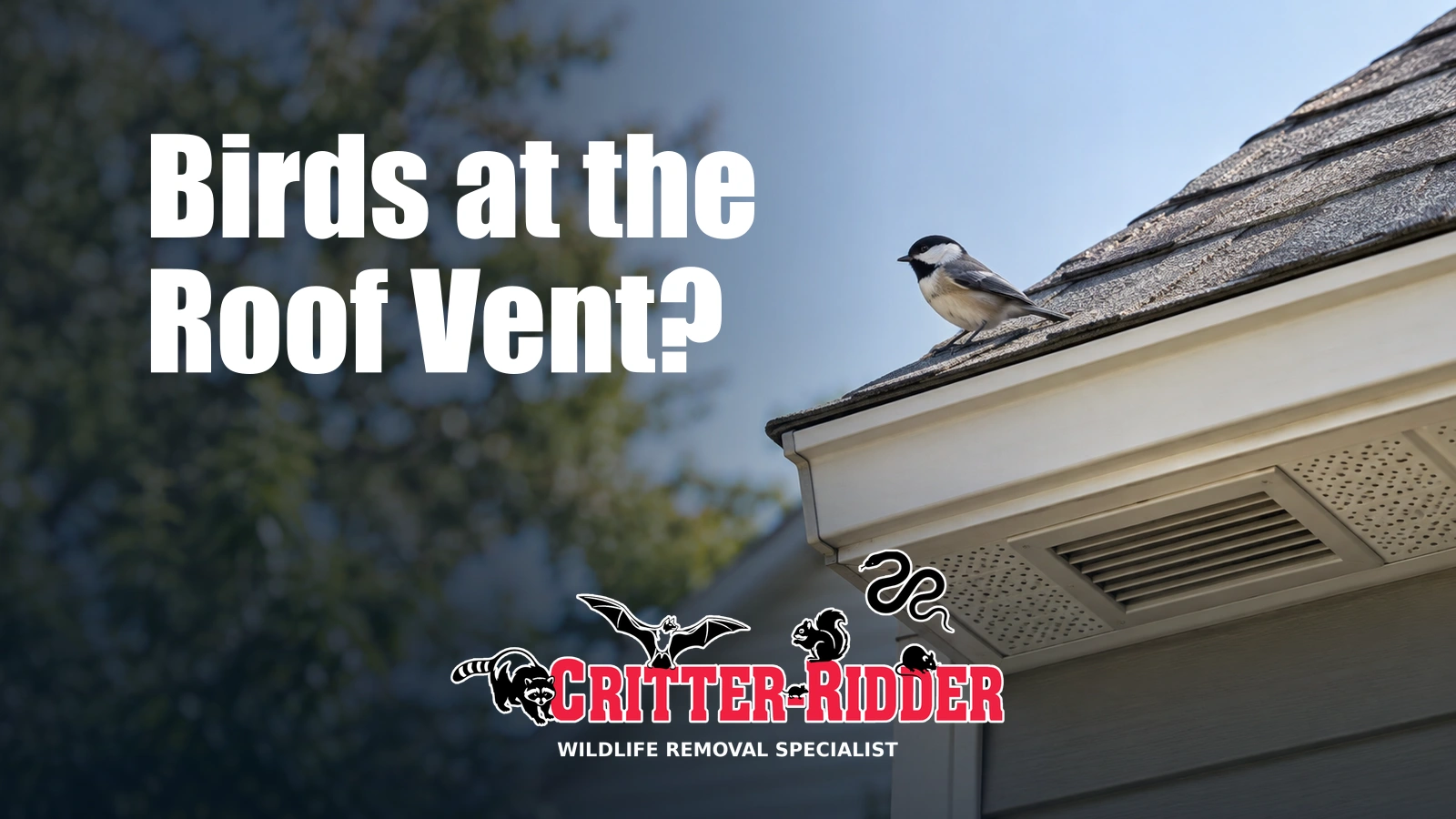
A bird landing on a roof edge or vent once may be ordinary outdoor activity. Repeated trips to the same opening create a pattern worth documenting, but they still do not prove the species, nest status, or extent of access.
Roof vents and soffits sit where building function and wildlife activity can overlap. A displaced screen, loose panel, small gap, or sheltered cavity may attract birds, while a bird seen nearby may only be perching or foraging.
The practical next step is not to guess or immediately close the opening. An inspection should separate what is confirmed from what is suspected, identify relevant access conditions, and account for timing, nest activity, and the intended function of the building opening.
Look for a Pattern, Not an Isolated Landing
Roof ridges, gutters, vent covers, chimneys, and soffit edges can provide convenient places for birds to land. One bird resting on a roof does not establish that it has entered the structure.
Repeated activity at one precise location is more useful. A bird that approaches the same vent, disappears behind a soffit edge, carries material toward an opening, or repeatedly leaves from the same gap may be using part of the structure.
Exterior observations still have limits. Sounds can travel through an attic or ceiling, and the location where movement is heard indoors may not be directly beside the exterior opening. The pattern helps direct an inspection; it does not replace one.
What You Can Observe Safely From the Ground
You do not need to climb a ladder or reach into an opening to collect useful information. A few specific observations can help distinguish occasional roof activity from a condition that deserves closer evaluation.
Watch from a safe location without crowding or disturbing the bird. If possible, observe the same area at more than one time of day. A short video often shows the flight path more clearly than a single photograph.
Record:
- the date, time, and frequency of the activity;
- the exact vent, soffit edge, fascia joint, or roof transition being used;
- whether the bird lands nearby or appears to enter and disappear;
- nesting material, feathers, droppings, staining, or a displaced screen;
- sounds above the ceiling or inside an upper wall; and
- any recent change to the vent cover, trim, roofing, or soffit.
Why the Vent or Soffit Location Matters
A roof vent is part of the building, not simply a hole that can be covered. Depending on the opening, it may provide attic ventilation or serve another necessary function. Soffits also protect roof edges and may contain ventilation components.
If a screen, panel, or trim section has failed, the correct repair must address wildlife access without blocking intended airflow, drainage, or equipment operation. Some damaged conditions may also require a roofer, HVAC professional, or another qualified trade.
The surrounding roofline deserves attention as well. A bird may use one visible opening while another nearby gap, loose return, or damaged transition remains vulnerable. An inspection should distinguish the active location from adjacent conditions that are only potential access points.
When a Bird-Control Inspection Makes Sense
An inspection becomes more useful when the activity is repeated, connected to the structure, or accompanied by physical evidence. The goal is to determine what the property conditions support before recommending removal, exclusion, cleanup, or deterrence.
Consider requesting an inspection when:
- birds repeatedly enter or leave the same roof vent or soffit opening;
- movement or vocal activity is heard inside an attic, ceiling, or upper wall;
- nesting material is visible at or behind a building opening;
- a vent screen, soffit panel, or adjoining trim appears loose or damaged;
- droppings, feathers, or staining recur beneath the same roofline location;
- birds return to the same structural area after earlier material was removed; or
- repair or screening is planned and the opening needs to be checked for active use first.
Active Nests Can Change the Timing
The bird species, nest location, current activity, and presence of eggs or young can affect what may be done and when. Applicable federal or state protections may also limit work around birds and active nests.
A nest that appears quiet from the ground may still be active. One calm day does not confirm that birds or dependent young are absent, and closing an opening too soon can trap wildlife inside or separate adults from young.
A responsible inspection should not promise immediate removal before those facts are understood. When work must wait, the findings should support a clear plan for monitoring the condition and completing appropriate exclusion or deterrence at the proper time.
What the Inspection Should Establish
A useful inspection connects the observed bird activity to the building. It should explain what evidence is accessible, which conclusions are supported, and what cannot be confirmed during the visit.
Critter-Ridder's field standard is straightforward: Inspect. Explain. Correct. The recommendation should follow the property evidence rather than forcing every bird concern into the same product or service.
The inspection should address:
- the likely species when visible evidence supports identification;
- whether nesting or entry activity is confirmed, suspected, or not observed;
- the precise opening or surface connected to the reported activity;
- the status and intended function of the vent, screen, soffit, or adjoining material;
- accessible nesting material, droppings, staining, or visible damage;
- nearby roofline conditions that may require correction or monitoring;
- timing, access, protection, or outside-trade limitations; and
- the appropriate sequence for active work, exclusion, deterrence, repair, or cleanup.
Removal, Exclusion, and Deterrence Are Different Steps
A bird inside a building, a nest at an opening, and birds repeatedly landing on an exterior surface are different conditions. They should not automatically receive the same recommendation.
Removal addresses an active bird when that work is appropriate. Exclusion corrects an approved opening after the active condition has been resolved. Deterrence changes a recurring landing or roosting surface through properly selected barriers, screening, spikes, cones, or another suitable system.
Cleanup and repair may be separate. Removing nesting material does not repair a failed screen, and closing one opening does not address an adjacent landing surface. The proposal should identify which part of the condition each recommended item is intended to solve.
Prepare for a More Useful Inspection
You do not need to identify the bird or diagnose the opening before calling. Share the address, the part of the roofline involved, when the activity occurs, how often it has repeated, and whether you have safe ground-level photos or video.
Do not climb onto the roof, remove a vent screen, reach into nesting material, or permanently close the opening before the activity is evaluated. Those actions can create fall, exposure, building, or wildlife concerns.
If birds are repeatedly using a roof vent, soffit, or adjoining opening at a Lexington property, request a bird-control assessment. Critter-Ridder can inspect the accessible conditions, explain what the evidence supports, and identify the appropriate next step.
Common questions
Bird Activity and Roof Vent FAQs
Does one bird near a roof vent mean birds are inside?
No. A bird may land near a vent while resting or foraging. Repeated entry and exit at the same opening, nesting material, indoor sound, or a displaced screen provides stronger reason for an inspection, but the condition still needs to be evaluated before the species or extent of access is confirmed.
Should I cover a roof vent if I see a bird entering it?
Not before the activity and nest status are understood. Closing an opening too soon can trap a bird inside, separate adults from dependent young, or redirect activity to another part of the structure. Any correction should also preserve the intended function of the vent.
Can every bird nest be removed immediately?
No. The species, location, nest activity, eggs or young, and applicable protections can affect what may be done and when. An inspection should establish those conditions before removal, exclusion, or deterrent work is scheduled.
What should I photograph before a bird-control inspection?
From the ground, photograph the vent, soffit, or roof transition and the surrounding area. If it can be done safely, capture a short video showing the bird's approach or exit path. Do not climb, reach into an opening, or disturb nesting material to obtain a closer image.